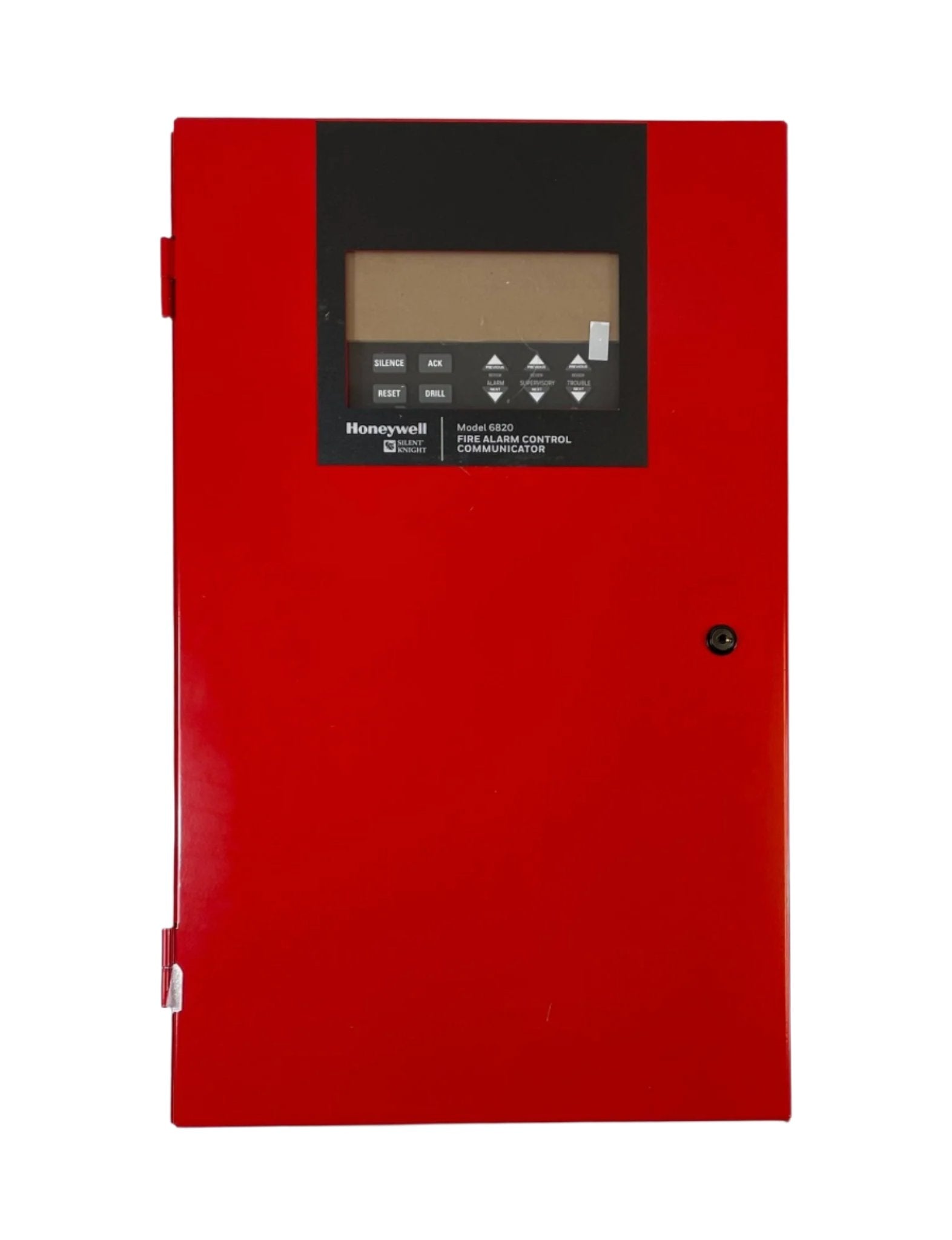
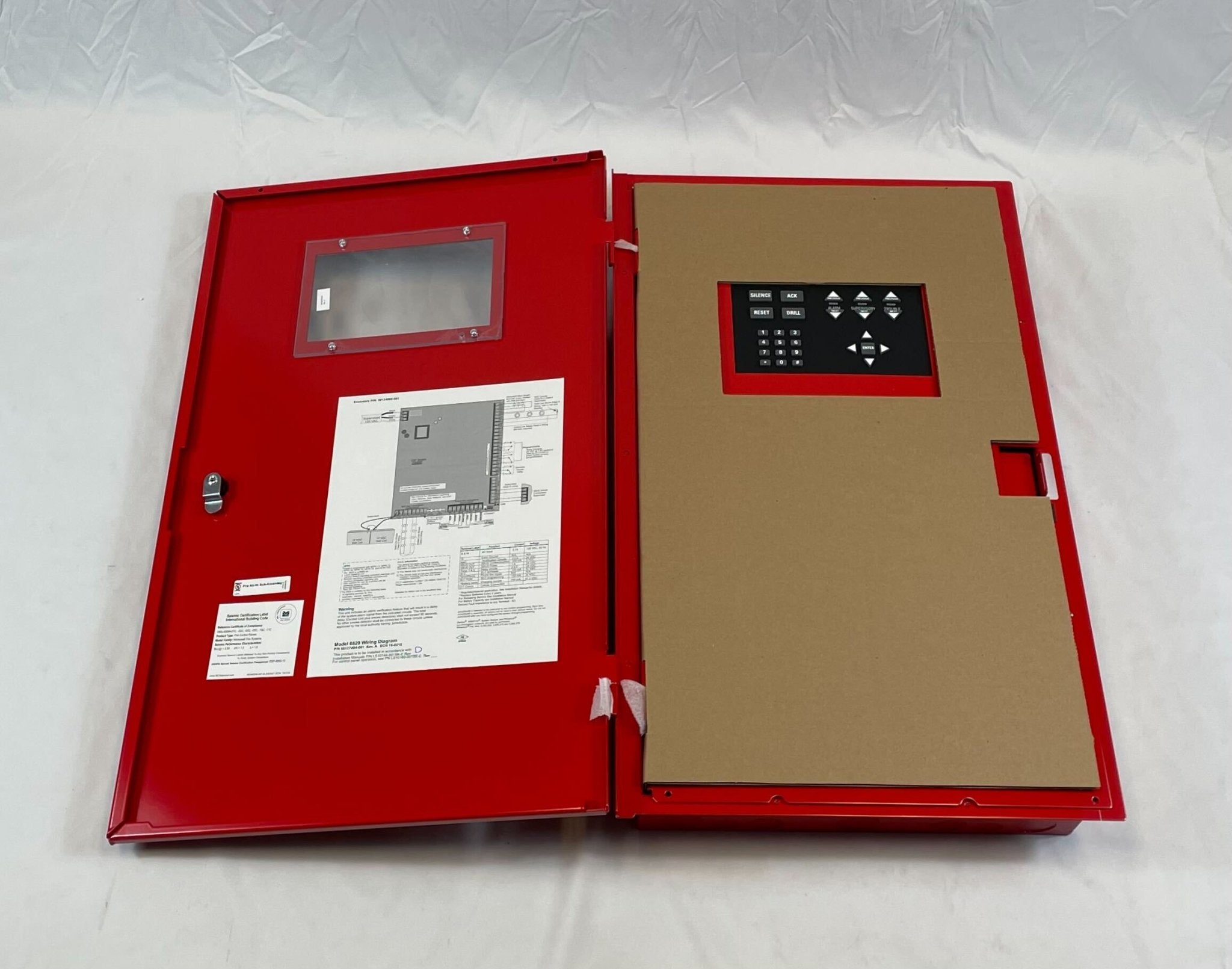
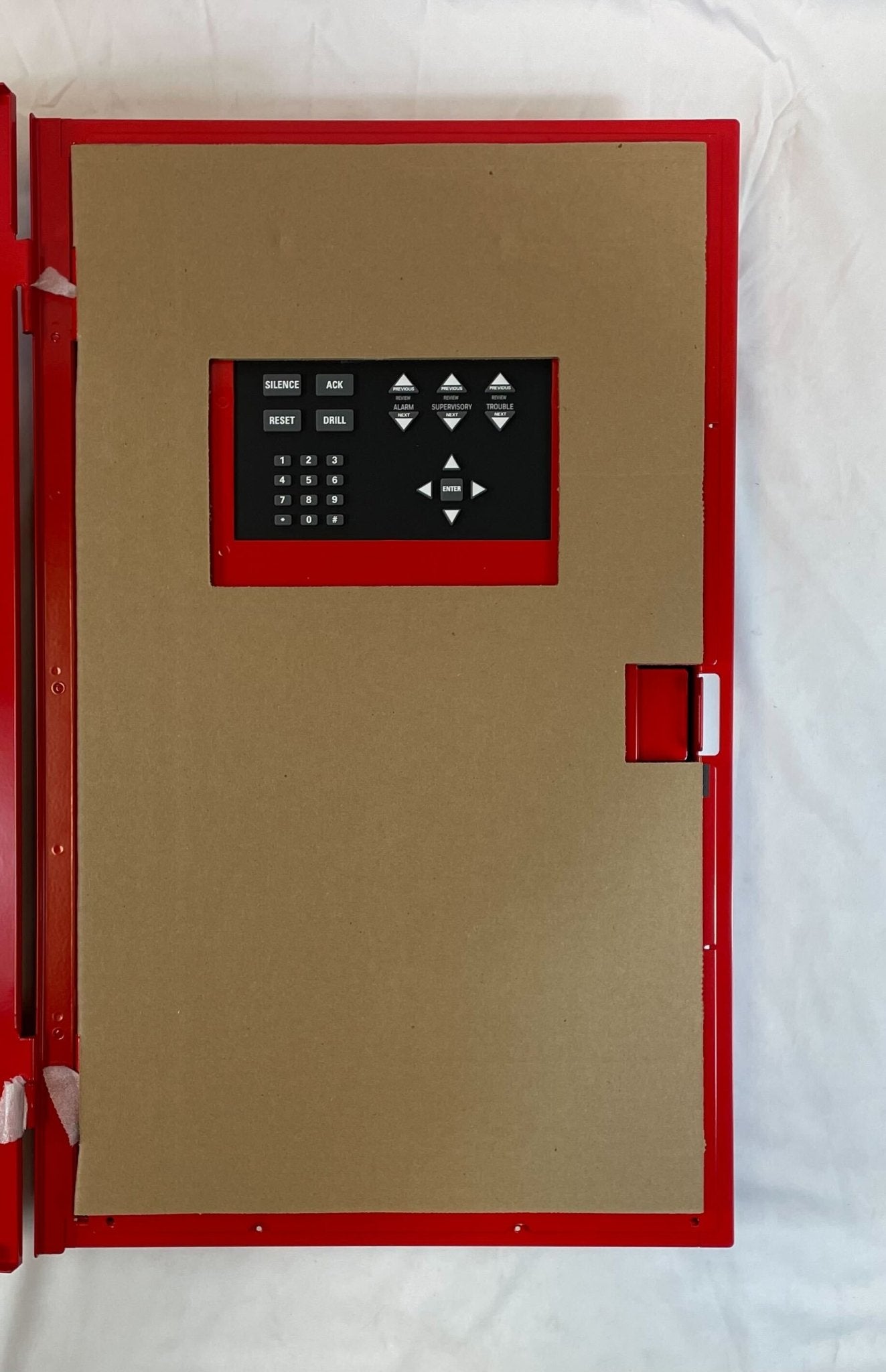
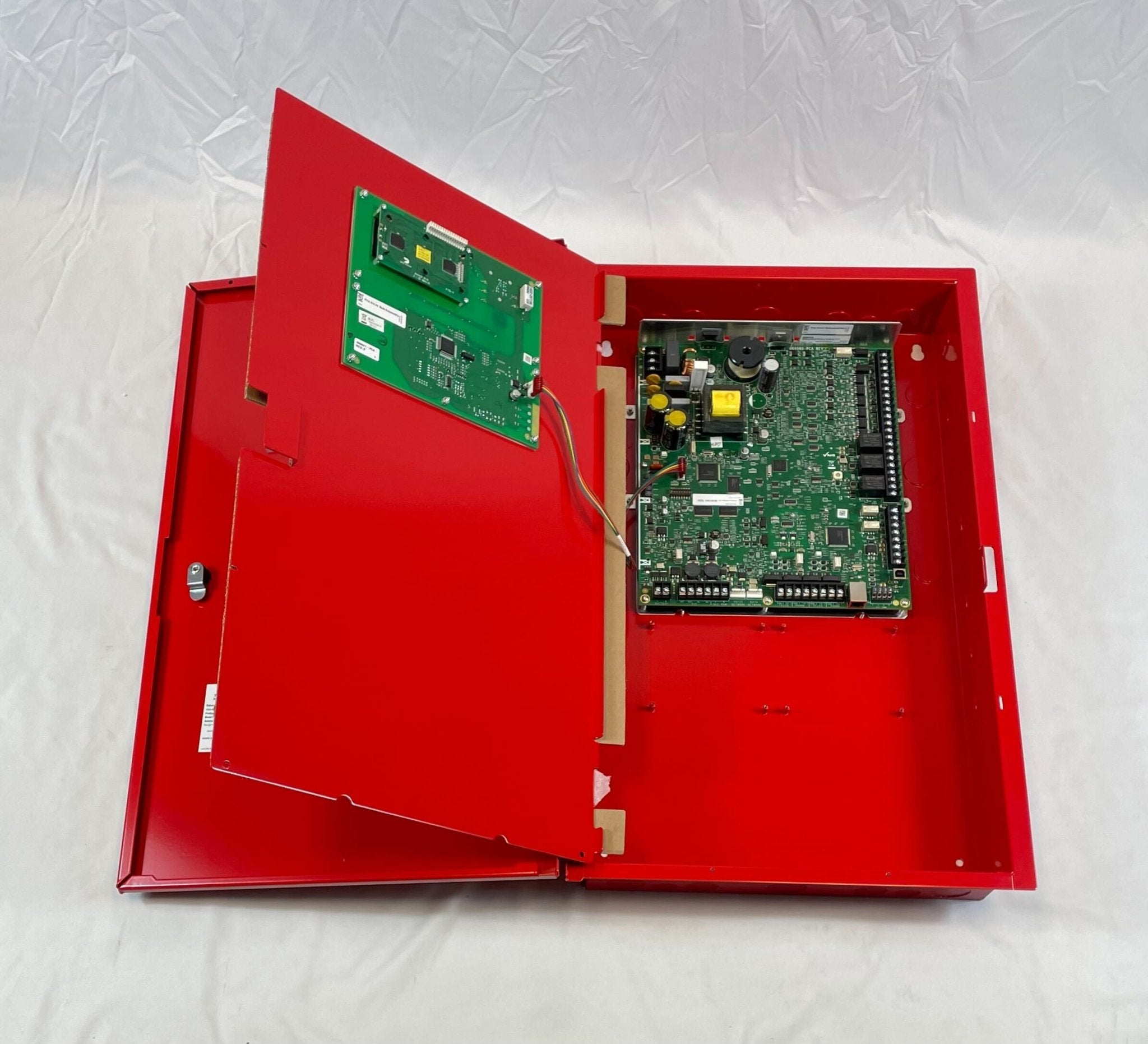
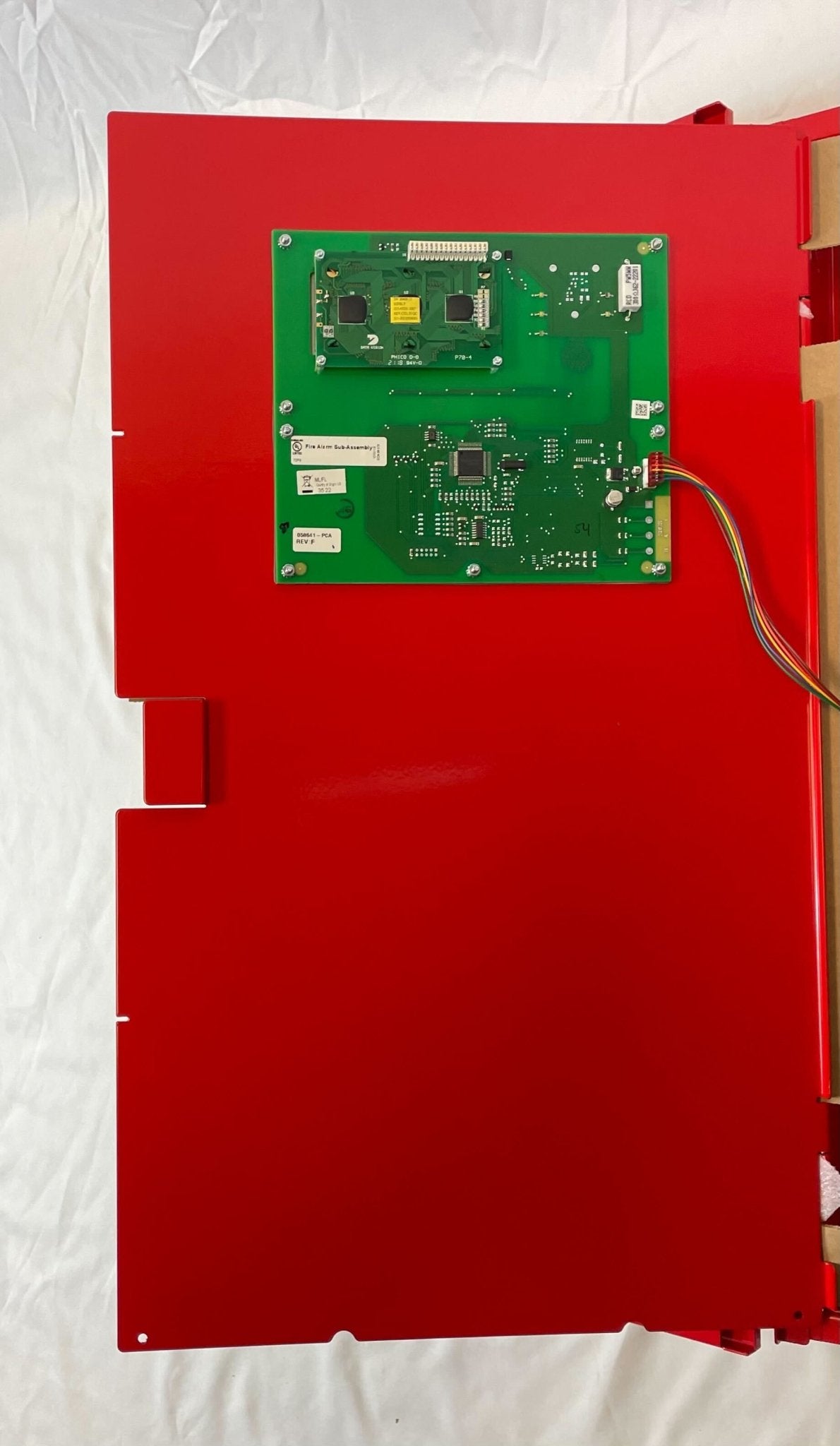
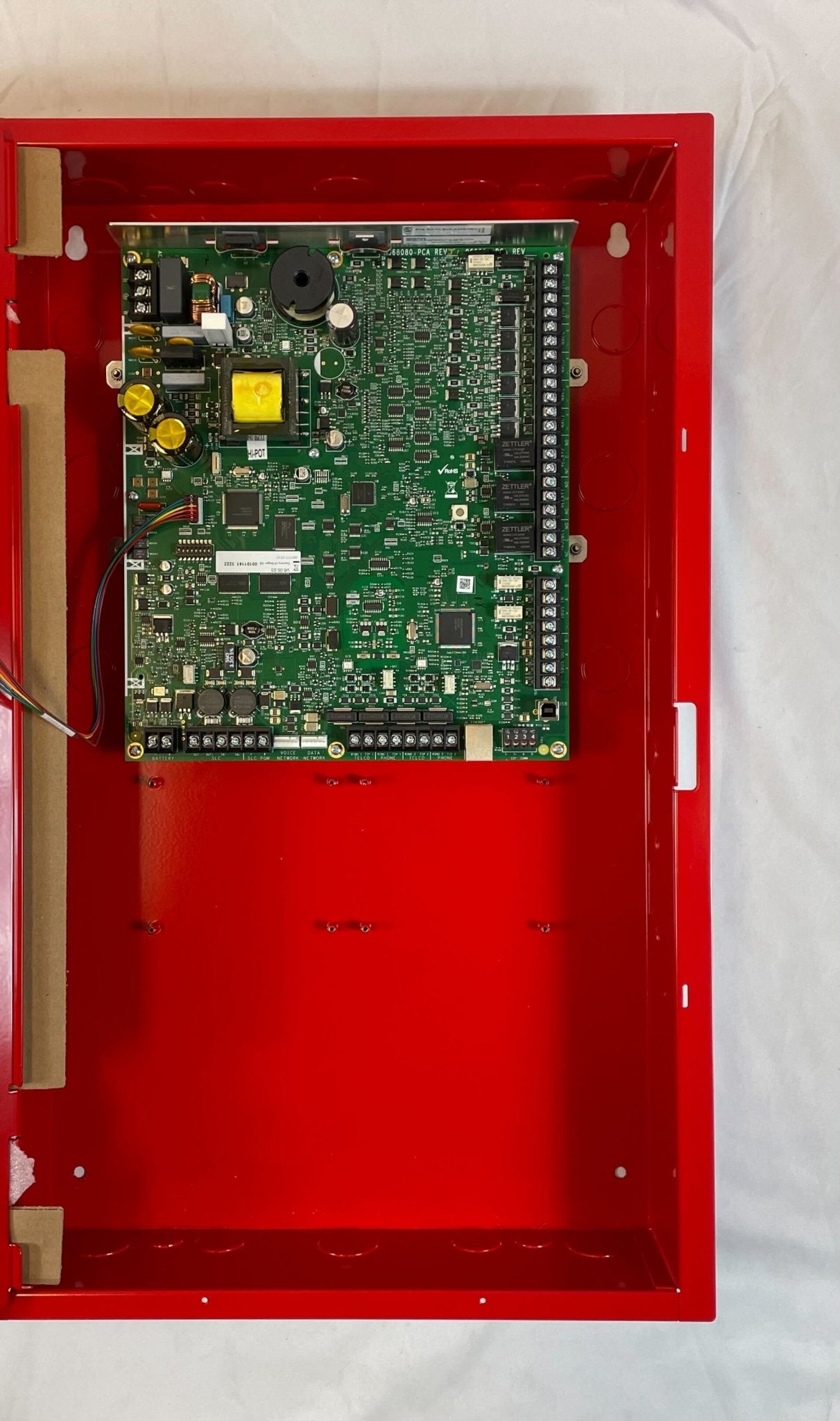
6820 — intelligent addressable fire alarm control panel with a built-in dual-technology (IP and POTS) communicator, expandable to 1,110 SK points.
The 6820 is the latest intelligent addressable FACP from Silent Knight and is a direct replacement for the 5820XL. The panel has one built-in signaling line circuit, which can support 159 System Sensor SK detectors and 159 SK modules, or 127 Hochiki SD protocol devices; additional SLC loops can be added for a maximum of 1,110 (SK) or 635 (SD) points per panel. Six onboard Flexput circuits can each be configured as a notification output or as auxiliary power, and the panel adds a form-C trouble relay plus two programmable form-C relays. Software features include drift compensation, pre-trouble maintenance alert, a built-in sensor test to comply with NFPA 72 calibration testing requirements, and a calibration trouble alert. A common communications and annunciation link allows up to 17 panels to be connected via copper or fiber optic cable, with a designated panel configured as the communicator for all panels in the link.
The built-in digital alarm communicator/transmitter is dual technology. The POTS side transmits system status to a central station over the public switched telephone network, while the IP communicator sends alarm signals over the Internet, saving the monthly cost of two dedicated business telephone lines. The secondary telephone line may be retained as backup although it is not required, and optional cellular reporting is available.
Specifications
| Intelligent signaling line circuits |
1 (expandable) |
| Addressable device capacity |
1,110 (SK) or 635 (SD) |
| Devices per built-in SLC |
159 SK detectors and 159 SK modules, or 127 SD protocol devices |
| Programmable software zones |
999 |
| Output groups |
999 |
| Output circuits |
6 (expandable) |
| SBUS devices |
24 (16 annunciators, 8 LED modules) |
| AC power |
120 VAC, 60 Hz, 3.3 A |
| Standby current |
190 mA |
| Alarm current |
250 mA |
| Flexput circuits |
Terminal block provides connections for six Class B or three Class A NACs or auxiliary power; power-limited, supervised circuitry. Maximum current per circuit 3 A, and cannot exceed 6 A total for all circuits. End-of-line resistor 4.7k ohm, ½ watt for Class B NACs |
| Communication loop |
Supervised and power-limited, Class A or Class B, 32 VDC, 150 mA |
| Relay contact rating |
2.5 A @ 27.4 VDC (resistive), Form C — two programmable relays and one fixed trouble relay |
| Battery |
Cabinet holds a maximum of two 18 AH batteries |
| Battery charger capacity |
7 to 35 AH |
| Dimensions |
16.4" W x 26.4" H x 4.1" D (41.66 cm x 67.06 cm x 10.41 cm) |
| Weight |
32 lbs. (14.5 kg) |
| History file |
1,000 events |
| Operating environment |
Meets NFPA requirements for operation at 0 to 49°C (32 to 120°F) and 93% ± 2% RH non-condensing at 32°C ± 2°C (90°F ± 3°F) |
| Standards |
UL 864 10th Edition and UL 2572 2nd Edition; complies with NFPA 72, NFPA 13, NFPA 15, NFPA 16, NFPA 70 |
| Agency listings |
UL Listed S2766; CSFM 7165-0559:0500; FDNY COA# 6249; FM Approved; Seismic (CA) VMA-45894-05C |
| Country of origin |
U.S.A. |
Installation notes
-
The 6 A Flexput cap is a total, not a per-circuit figure: each of the six Flexput circuits is rated 3 A maximum, but all circuits together cannot exceed 6 A. Sizing six circuits at 3 A each will overload the supply — budget the notification load against the 6 A ceiling.
-
Class A halves the circuit count: the same terminal block yields either six Class B NACs or three Class A NACs. Decide the survivability class before laying out notification zones.
-
SK and SD devices cannot be mixed: the panel speaks both System Sensor (SK) and Hochiki (SD) protocol, but the two device families cannot be mixed in the same fire alarm system, and the point ceiling differs sharply — 1,110 for SK against 635 for SD.
-
End-of-line resistor: 4.7k ohm, ½ watt on Class B NAC circuits.
-
Battery capacity is split between two limits: the charger handles 7 to 35 AH, but the panel cabinet only holds up to two 18 AH batteries. Anything larger requires the RBB remote battery box, which holds batteries up to 35 AH.
-
Recommended ambient is narrower than the listed range: although the system meets NFPA requirements to 120°F, Honeywell recommends installing the panel and its peripherals in a normal room temperature of 15 to 27°C (60 to 80°F), because extreme temperature and humidity shorten the useful life of the standby batteries and electronics.
-
SWIFT wireless is SK-only: SWIFT wireless devices are compatible with System Sensor (SK) devices only and are not compatible with Hochiki (SD) devices.
-
Programming: JumpStart auto programming minimizes the work to start a new system; a built-in USB interface, the onboard keypad, remote annunciators, or the Windows-based Honeywell Fire Software Suite (HFSS) can all be used.
Related models
-
6820EVS — the same addressable platform with an integrated emergency voice system added
-
5820XL — the previous-generation panel the 6820 directly replaces
-
6815 — SLC expander for SK devices; 5815XL — SLC expander for SD devices
-
5895XL — 6 A power supply with six Flexput circuits and two Form C relays
-
5496 — 6 amp NAC power expander with four power-limited output circuits
-
6860 / 6855 / 5860 / 5860R — LCD remote fire annunciators; 5865-3 and 5865-4 LED annunciators
-
CELL-CAB-SK / CELL-MOD / IPGSM-4G — optional cellular and dual-path communicators
-
SK-NIC — network interface card, with SK-FML (multi-mode) or SK-FSL (single-mode) fiber optic transmitter/receiver
-
RBB — remote battery box accessory cabinet, holds batteries up to 35 AH
Specifications taken from the Honeywell Silent Knight data sheet "6820 Intelligent Fire Alarm Control Panel with Communicator," document 351610:C (2022). Manufacturer specifications are subject to change without notice.