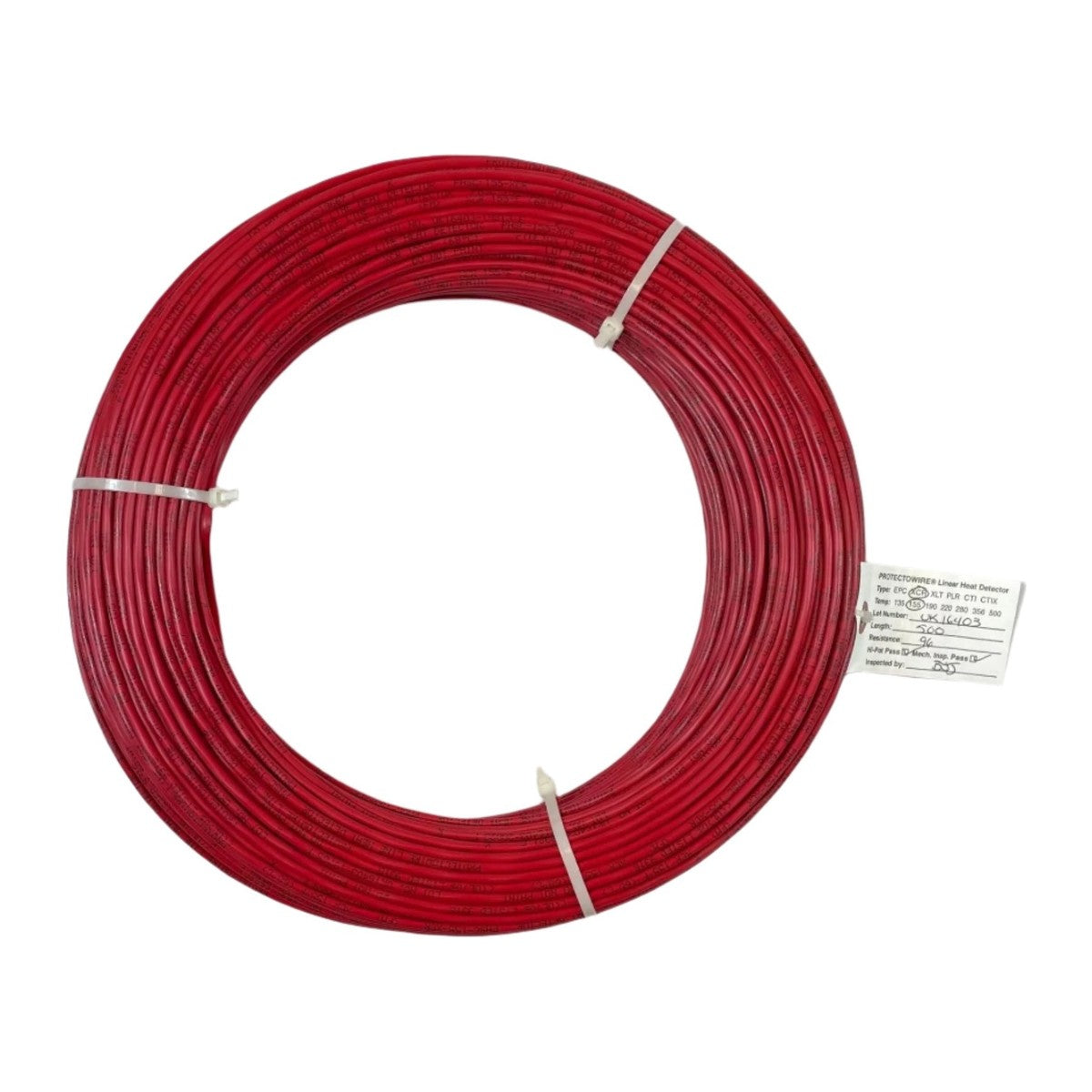
Protectowire PHSC-155-XCR — 155 °F (68 °C) fixed-temperature linear heat detector cable in the high-performance XCR fluoropolymer jacket.
Two steel conductors, each insulated with a heat-sensitive polymer, are twisted so the insulation stays under spring pressure, then taped and jacketed. At the rated temperature the polymer yields, the conductors touch and an alarm starts at the first heated point along the run.
- Alarm temperature 155 °F (68 °C), fixed, contact closure
- Maximum ambient 115 °F (46 °C) for UL Special Application use; 100 °F (38 °C) is the recommended UL 521 maximum ambient for open-area protection on every 155 model
- UL and cUL certified spacing 50 ft (15.2 m); FM spacing 30 ft (9.1 m)
- Nominal 5/32 in. (4 mm) diameter, 2.5 in. bend radius, 0.185 ohms/ft, 30 VAC and 42 VDC max
- The only Protectowire jacket FM approved for corrosive areas
The jacket is the whole difference from PHSC-155-EPC, the vinyl cable for interior work, and from PHSC-155-LSZH; all three share the rating and the spacings. Higher ratings run PHSC-172 to -356-XCR, and the suffix -M supplies any on messenger wire.
Documents
FAQ
At what temperature does the PHSC-155-XCR alarm?
It alarms at a fixed 155°F (68°C). The maximum recommended ambient temperature is 115°F (46°C).
What is the difference between the XCR and EPC jackets?
EPC is a durable flame retardant vinyl jacket for multi-purpose use. XCR is a high-performance fluoropolymer with excellent chemical, abrasion and weather resistance, and it is the only Protectowire detector FM approved for corrosive areas.
What spacing applies?
Maximum spacing is 50 ft (15.2 m) for UL/cUL and 30 ft (9.1 m) for FM.
Does a certain length of cable have to be heated to alarm?
No. The detector alarms at the first heated point anywhere along its length and does not require a specific length to be heated.