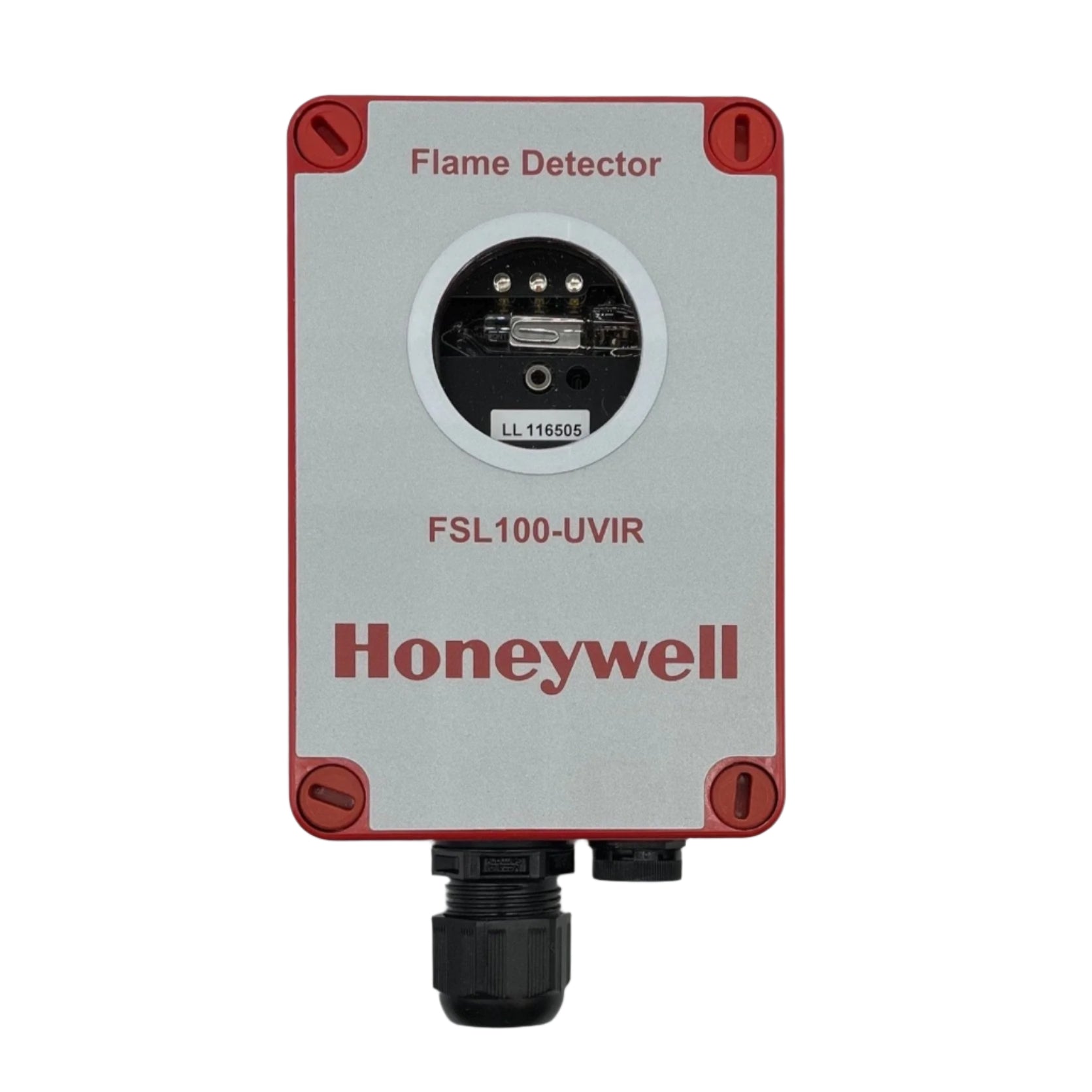
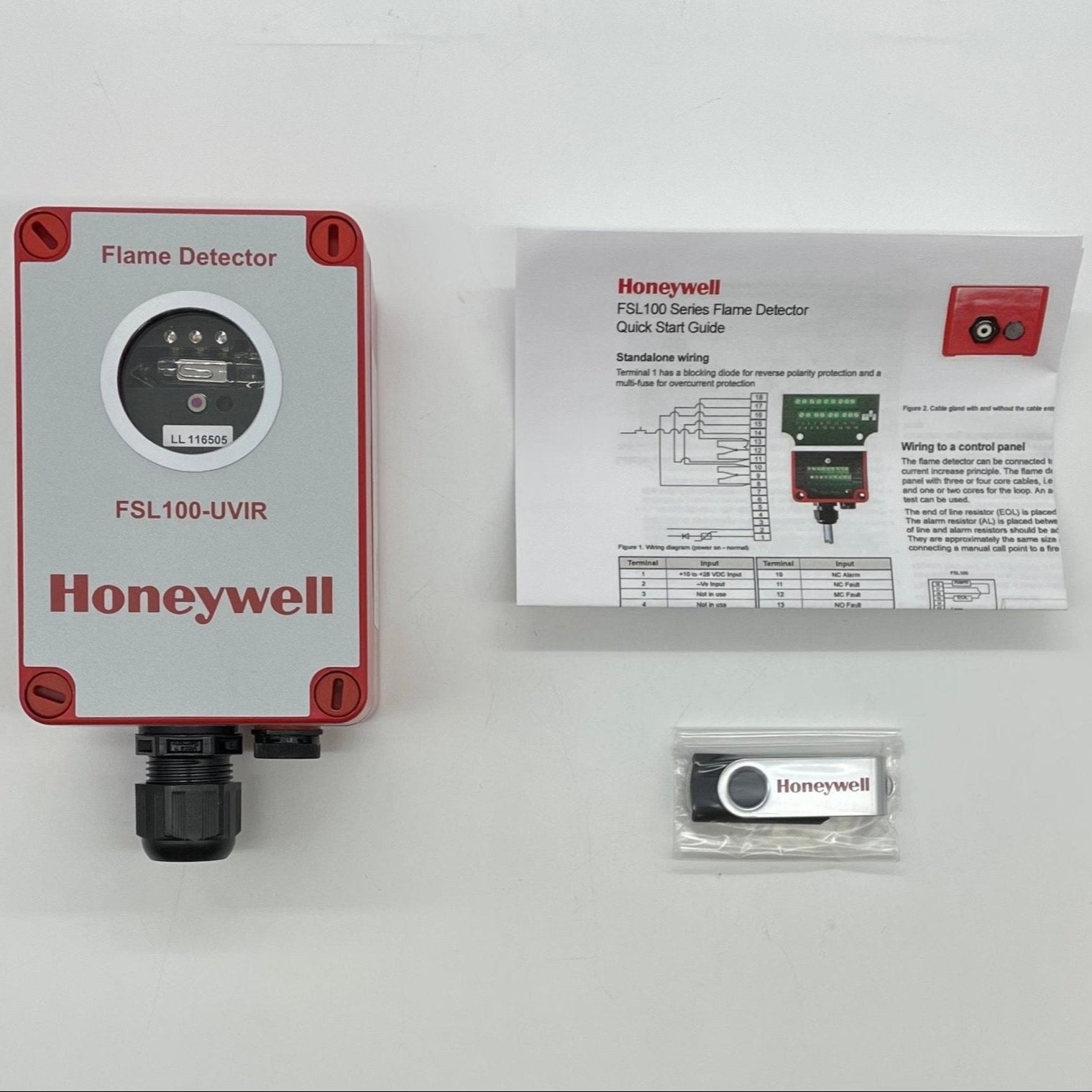
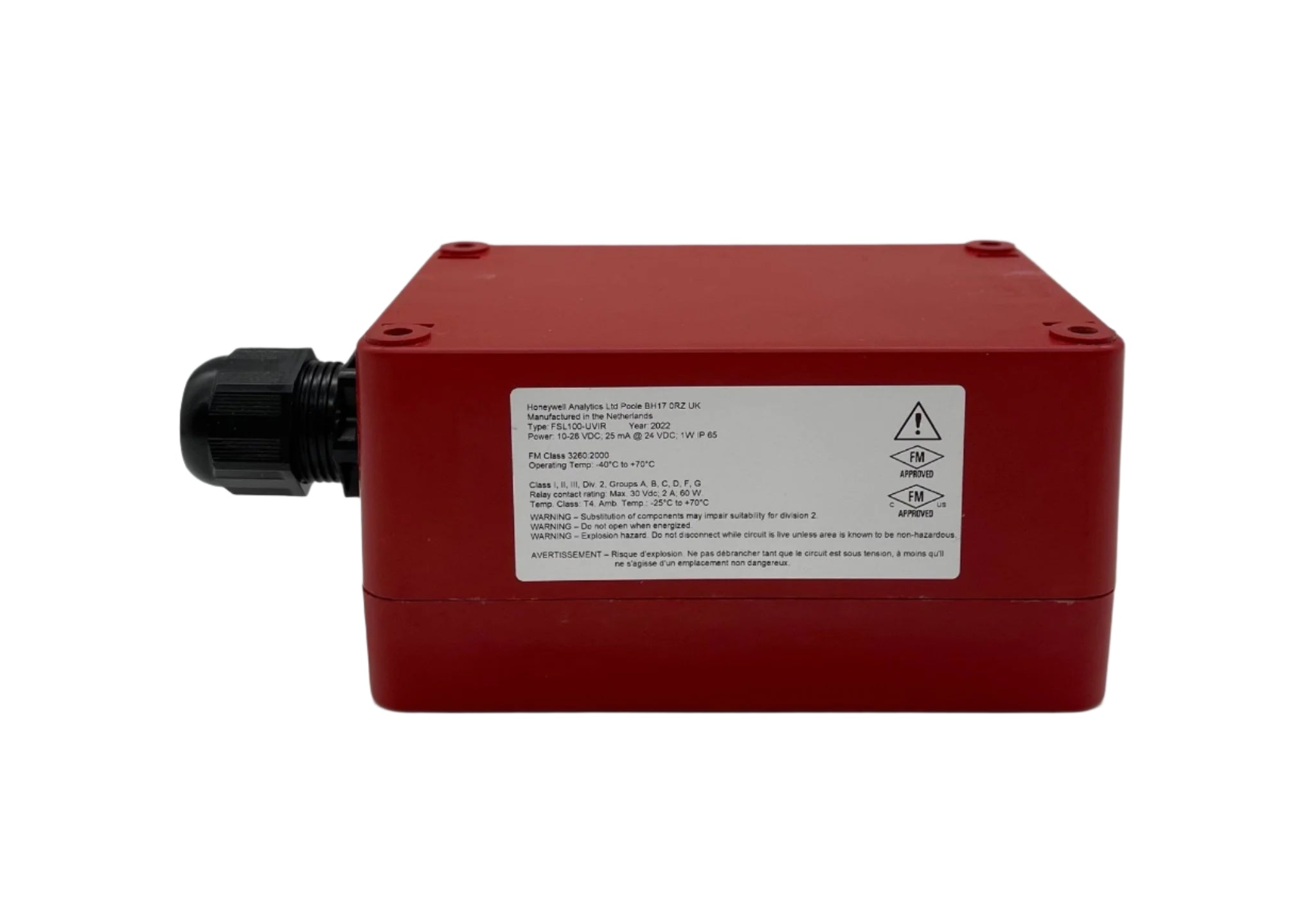
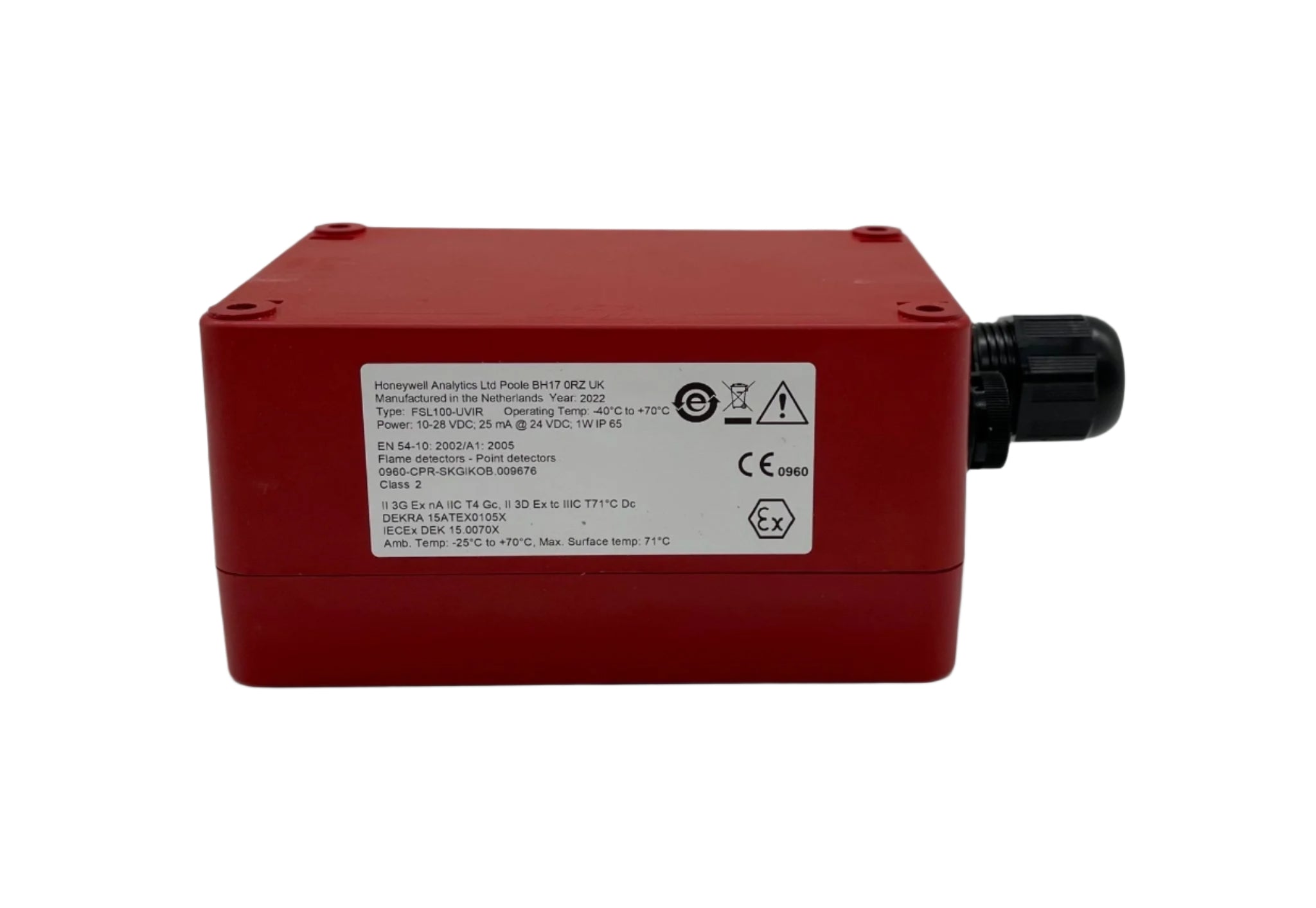
Honeywell FSL100-UVIR — a combined ultraviolet and infrared flame detector that analyses flame flicker-frequency to detect flaming fires fast while rejecting false alarms.
The UV/IR variant of the FSL100 series uses a dual sensing methodology, so a wide range of hydrocarbon and non-hydrocarbon fires can be effectively detected. Honeywell recommends it for engine test cells and rooms, gas cabinets, laboratories, gas and gasoline engine rooms, indoor chemical, fuel and solvent storage, indoor hydrogen storage and processing, CNG refilling for public transport, loading and unloading terminals, monitoring of machinery, and oil and gas pipeline and pumping stations. It is small and lightweight but built for tough indoor and outdoor environments and for potentially explosive atmospheres, carrying an ATEX Zone 2/22 certificate. Relay and mA outputs are standard, and the lightweight glass-reinforced polyester housing has pre-formed knockouts. The swivel mount bracket is a separate order.
Specifications
| Sensing method |
Dual UV and IR sensing with analysis of flame flicker-frequency |
| Range |
25 m / 80 ft, alarming within 10 seconds to a 1 ft² (0.1 m²) n-heptane fire |
| Cone of vision |
90° minimum, horizontal and vertical |
| Alarm response time |
8 to 30 seconds |
| Start-up time |
< 10 seconds |
| EN54-10 sensitivity |
Class 2 |
| Power |
10–28 VDC (12–24 VDC nominal) |
| Operating current, normal |
25 mA at 24 VDC |
| Current in alarm |
±75 mA at 24 VDC |
| Current output |
4–20 mA stepped, sinking, non-isolated: 0 mA power or microprocessor fault, 2 mA optical fault, 4 mA normal operation, > 20 mA alarm |
| Alarm relay |
De-energized during normal operation with no alarm; SPDT, 30 VDC – 2 A, 60 W max. |
| Fault relay |
Energised during normal operation with no fault; SPDT, 30 VDC – 2 A, 60 W max. |
| Local LEDs |
Continuous green normal, continuous yellow fault, flashing yellow fault plus prompt to repeat self-test after a self-test failure, continuous red alarm |
| Alarm output settings |
LEDs and relays selectable latching or non-latching; factory setting latching |
| Self-test |
Automatic Sensor Test (built-in self-test) plus manual self-test |
| Cable entry and terminals |
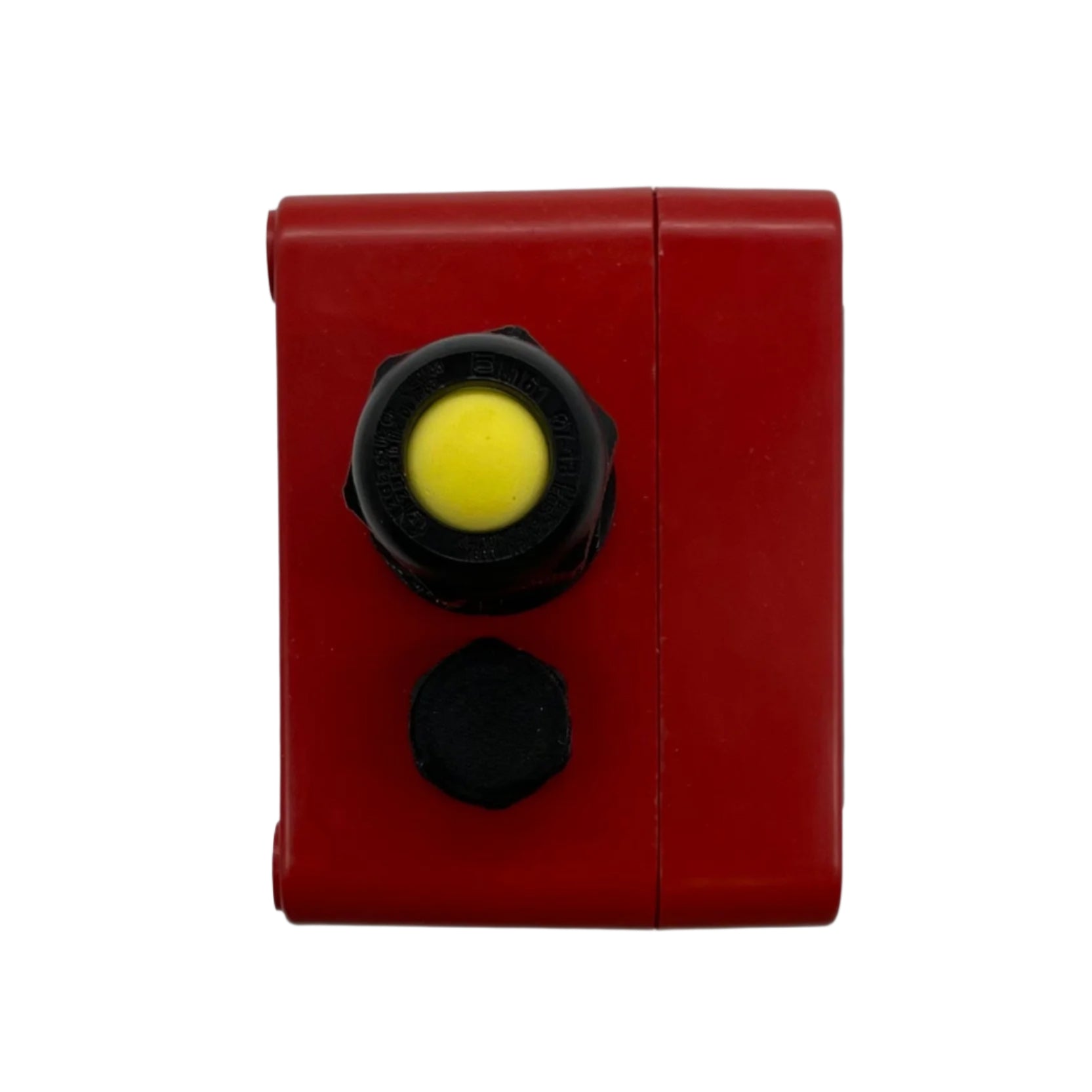
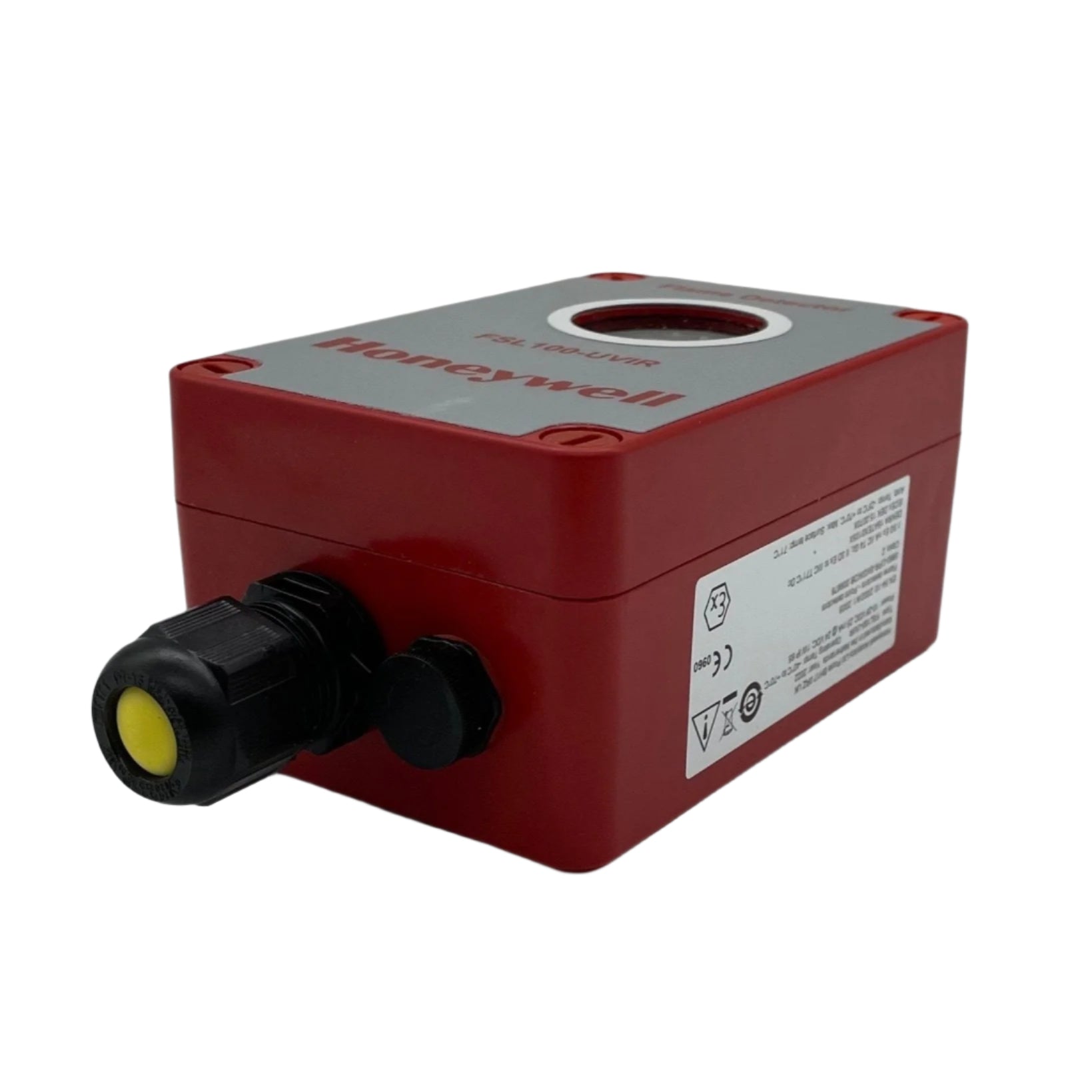
M20 clearance entry; gland supplied for cable diameter 0.2" (5.5 mm) to 0.5" (13 mm); terminals suitable for 0.5 mm² (20 AWG) to 1.5 mm² (15 AWG) wire |
| Housing |
Glass Reinforced Polyester (GRP), non-incendive, UV resistant, self-extinguishing V-0 (UL-94) |
| Pressure compensating element |
PCE avoids moisture build-up in the housing as ambient air pressure changes |
| Dimensions |
4.9 x 3.15 x 2.25 in. (125 x 80 x 57 mm) |
| Weight |
1.05 lb (465 g) |
| Ingress protection |
IP65 |
| Operating temperature |
-40°F to +158°F (-40°C to +70°C) |
| Ambient temperature, ATEX and FM class 3611 |
-13°F to +158°F (-25°C to +70°C) |
| Approvals |
Approved to EN54-10 and FM3260 flame detector standards; ATEX Zone 2/22 |
| Warranty |
2 years |
Installation notes
-
Keep welding at a distance: the UV/IR is resistant to radiation from electric welding only when the welding takes place more than 10 feet from the detector. A welding rod contains organic compounds that may produce a small real flame.
-
Aim it, then check the cone: the 80 ft figure is on-axis to a 1 ft² n-heptane fire. Coverage falls off across the 90° minimum cone of vision, so lay out the hazard against the cone rather than assuming an 80 ft radius sphere.
-
Resistor power limit: when connecting to a fire control panel through end-of-line and alarm resistors, each resistor must be rated 2 W minimum and the total dissipation of both together must not exceed 2 W.
-
Latching is the factory default: LEDs and relays ship latching. If the sequence of operation expects auto-reset, change the setting during commissioning.
-
Fault relay fails safe: the fault relay is energised in normal operation, so loss of power reports a fault. The alarm relay is the opposite, de-energized when there is no alarm.
-
Swivel mount sold separately: the detector ships without a bracket; the swivel mount is PA66 with stainless steel fixings, 280 g (0.62 lb).
-
Good light immunity, not total: the UV/IR resists direct and reflected sunlight, fluorescent tubes, glass-covered halogen lamps, and arcs and electric discharges from static or electric motors.
Related models
-
FSL100-UV — ultraviolet only, EN54-10 Class 2, same 25 m / 80 ft range. Suited to indoor work such as fume hoods and hydrogen storage, and effective on materials burning at low temperatures such as sulphur.
-
FSL100-IR3 — triple infrared, longer 110 ft / 35 m range, EN54-10 Class 1. Particularly suited to liquid hydrocarbon and dirty fires, affected less by window contamination or smoky fires.
-
FSL100 swivel mount — optional swivel mounting bracket, ordered separately.
-
FSL100-TL — long range test lamp with universal charger and carrying case, non-EX; spares FSL100-TLBT battery, FSL100-TLBU bulb and FSL100-TLCH charger kit.
Specifications taken from the Honeywell Analytics data sheet "Flame Detection — FSL100 Series Flame Detectors UV, UV/IR, IR3," document 13475_H_FSL100_DS01155_V2_AMER (11/16), with certification and accessory detail from Honeywell document HON-BR-011-01_EN (09/16). Manufacturer specifications are subject to change without notice.