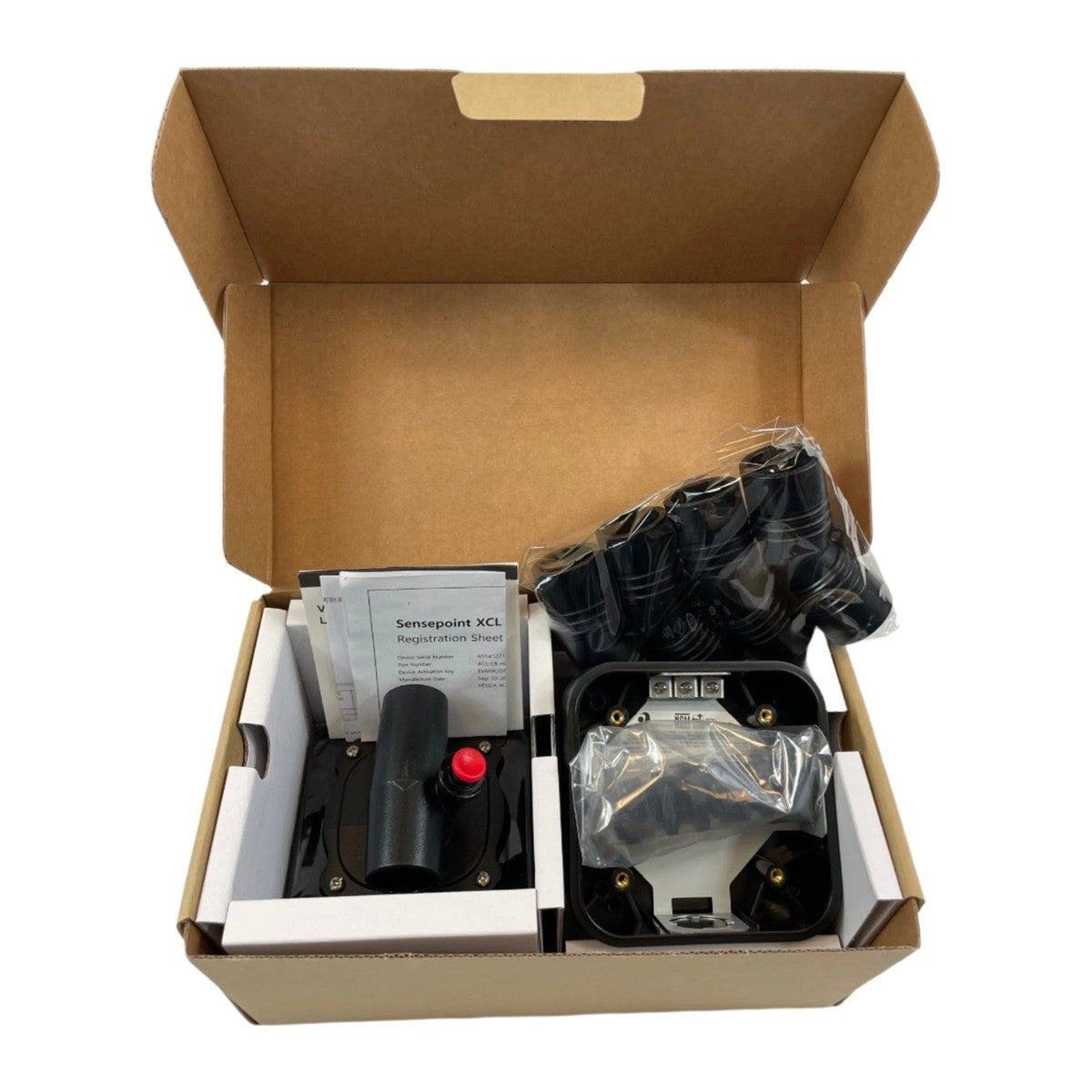
Vesda XCL-LB-H2-RA is the hydrogen (H2) version of the VESDA Sensepoint XCL Large Bore aspirated gas detector. It connects to a standard 25 mm (0.98 in) or 27 mm (1.06 in) OD aspirating smoke detection pipe network and uses the airflow in the pipe to bring samples from multiple holes to the gas sensor.
Because it shares the existing pipe network, gas detection can be added without new wiring or conduit to the sampled area, and the detector can sit outside the protected zone where it is easy to service. The measuring range is fixed at 1000 ppm.
Features
- Hydrogen detection, 1000 ppm fixed range
- 4-20 mA analog output plus two relays
- Uses an existing 25 or 27 mm ASD pipe network
- Multi-point and remote sampling
- Integral gas port for bump test and calibration
- Field-replaceable sensor cartridge
- Sensepoint smart device app
Specifications
| Gas and range |
Hydrogen, 1000 ppm (fixed) |
| Outputs |
4-20 mA and 2 relays (24 VDC / 250 VAC, 5 A) |
| Pipe OD |
25 mm (0.98 in) or 27 mm (1.06 in) |
| Supply voltage |
24 VDC nominal (11-32 VDC) or 20-27 VAC |
| Dimensions |
4.4 x 4.4 x 2.3 in (113 x 113 x 59 mm) |
| Weight |
1.1 lb (500 g) |
| Operating temperature |
-4 to 122°F (-20 to 50°C) |
| Enclosure |
IP65, NEMA Type 4 |
Specifications taken from the manufacturer data sheet: VESDA Sensepoint XCL - Large Bore Data Sheet.
Documents
FAQ
How does the Large Bore version sample gas?
It connects to an Xtralis aspirating smoke detection pipe network and uses the airflow in the pipe to bring samples from multiple holes to the gas sensor.
Which gases are available in the Sensepoint XCL Large Bore family?
Xtralis lists carbon monoxide, flammable (catalytic), carbon dioxide and hydrogen versions, among others. This model is the hydrogen (H2) version.
Can the sensor be calibrated and bump tested?
Yes. The installation manual covers calibration through the calibration port and bump testing, as well as gas sensor replacement.