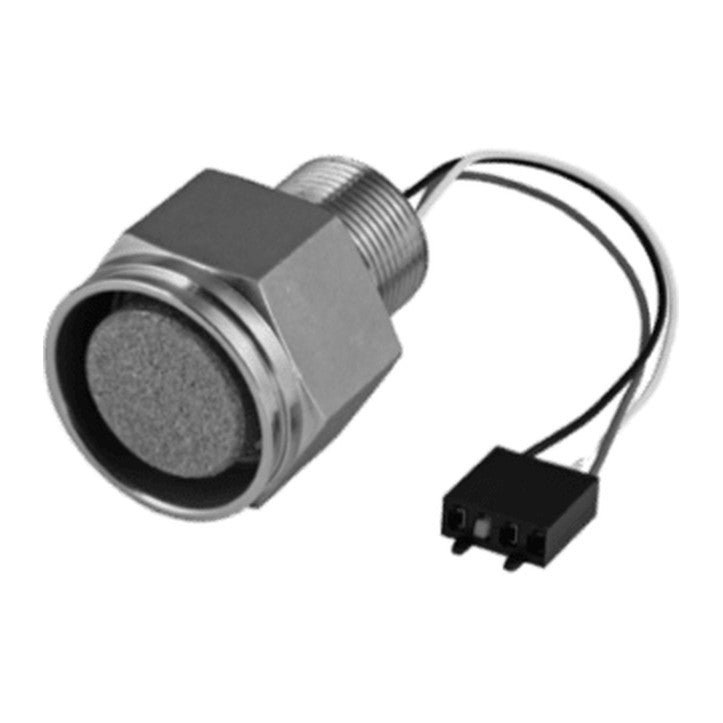
Det-Tronics 006824-001 (model CGSS1A6C2R1X) is a CGS catalytic combustible gas sensor. A matched pair of pellistor beads, one active and one reference, measures flammable gas in the % LFL range, and the sensor detects virtually all combustible gases, including hydrogen. It connects to a Det-Tronics transmitter or controller.
Specifications
| Sensing |
Catalytic bead (pellistor), poison resistant |
| Housing |
One-piece 316 stainless steel, sinter bonded flame arrestor |
| Compatible transmitters |
FlexVu UD10, FlexVu UD30, Infiniti U9500, Model 505, EQ22xxDCUEX, STB |
| Operating temperature |
-67 °F to +257 °F (-55 °C to +125 °C) |
| Performance temperature |
-40 °F to +167 °F (-40 °C to +75 °C) |
| Humidity |
0 to 99% RH, non-condensing |
| Accuracy |
±3% LFL from 0 to 50% LFL; ±5% LFL from 51 to 100% LFL |
| Sensor life |
3 to 5 years in a suitable environment |
| Calibration |
30 days after first calibration, then every 90 days |
| Approvals |
FM/CSA Class I, Div. 1, Groups B, C, D; ATEX and IECEx Ex db IIC T3/T5 |
Features
- Integral thermal barrier and EMI-resistant sinter bonded construction
- Thread options of 3/4 in. NPT, M20 or M25; 6 in. or 30 in. leads; constant voltage or constant current types
- SIL 2 certified to IEC 61508 when used with SIL 2 UD10 or UD30 models
Related models
The CGS model code selects thread, lead length and sensor type; order the exact code that matches the transmitter and housing in service.
Documents
FAQ
Which transmitters work with the CGS sensor?
Det-Tronics lists the FlexVu UD10 and UD30, Infiniti U9500, Model 505, EQ22xxDCUEX and the STB.
What gases can it detect?
Virtually all combustible and flammable gases, including hydrogen, in the % LFL range.
How long does the sensor last?
3 to 5 years when the environment is free of substances harmful to catalytic sensors.
How often must it be calibrated?
30 days after the first calibration and every 90 days after that, or as the application requires.